TTC USB Outlets are Already Obsolete
Making decisions on hardware installations is tricky, because unlike software you can't just fire over an update. This is why I was very skeptical seven years ago when the TTC's electric buses started installing USB-A ports (the one everyone's used to) for charging.
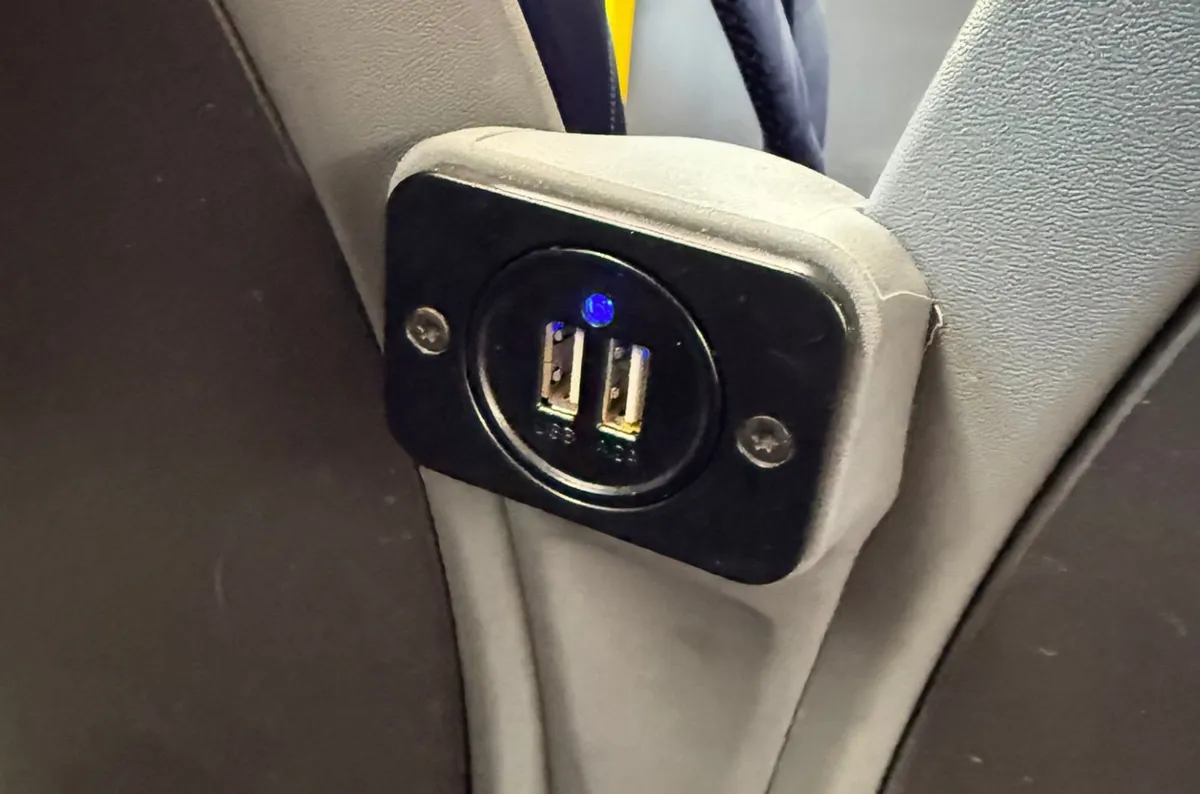
In 2018 when the announcement was made, USB-C was being produced for around four years, but didn't have the mainstream popularity like it does today. Apple had the same year released products that used USB-C and had announced its intention to switch over.
The TTC's decision to install dual-port USB-A chargers providing 2.1A per port (10.5W maximum, with 4.2A total capacity shared between both ports) was already outdated compared to what was technologically available and what flagship smartphones of that time could accept. The iPhone X and XS supported 18W USB-C PD fast charging, Google's Pixel 3 supported 18W PD, and Samsung's Galaxy S9 could handle 15W fast charging through USB-C.
The main limitation of USB-A is that 2.1A @ 5V represents the maximum current a standard USB Type-A cable can safely handle, whereas USB-C can negotiate higher voltages and currents with compatible devices to deliver significantly more power. Even mid-range phones were beginning to adopt USB-C because of it's faster charging capabilities, a key attribute in smartphone competitiveness.
By installing USB-C PD ports at 18-30W in 2018, the TTC could have enabled passengers to meaningfully charge their phones during typical 20-40 minute commutes, potentially adding 40-60% battery life instead of the 10-20% that 10.5W USB-A provides. The cost difference per port was likely only $10-20 more for USB-C PD capability, a small expense item in the $178 million bill that would have future-proofed the hardware investment for the buses' lifespan.
Instead, the TTC chose the cheapest option that was already becoming legacy technology, meaning passengers needed to carry outdated technology into the 2030s in order to charge their phones at speeds that only leave you frustrated.
The buying decision for the bus ports was probably made much earlier in the procurement process, but I wanted to highlight the difference between forward-thinking and generic technology investments.
Also, one more thing: if you're going to install any USB outlet in public, you want to cover it up unless you want dust and gum to jam it all up.